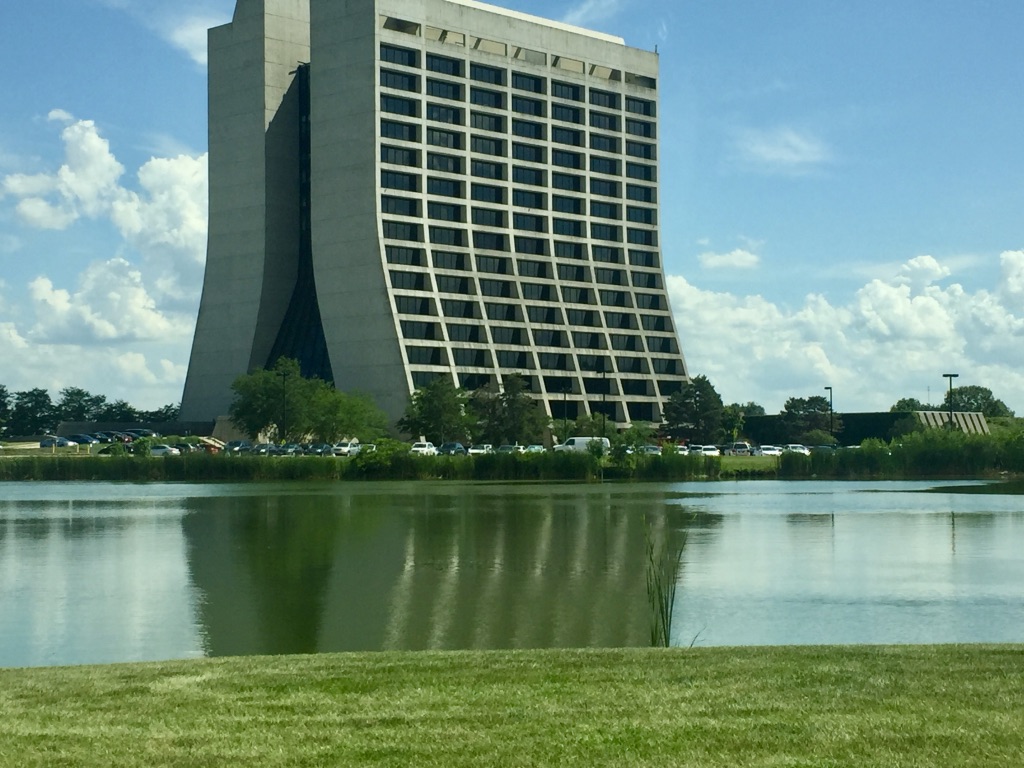
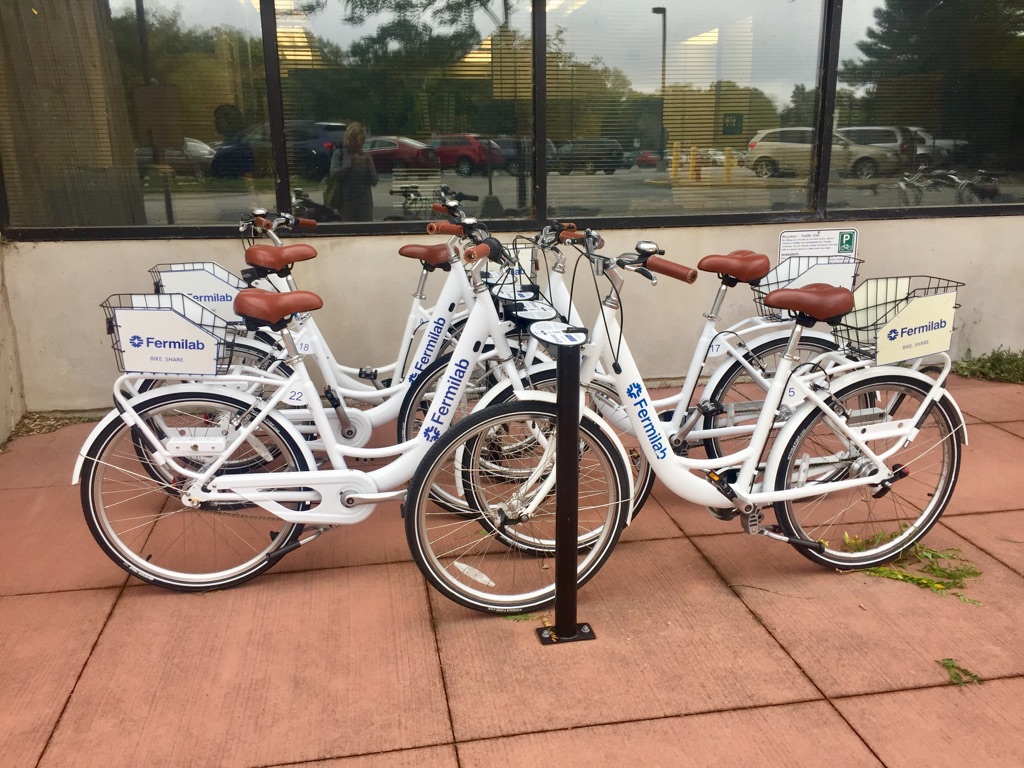
We forgo the bicycles that are reserved for staff at the Fermi National Accelerator Laboratory (Fermilab) and take a shuttle bus from the main building to a warehouse-like structure painted baby blue. This is where monthly tours of the DZero particle detector and Tevatron begin, only the Tevatron, a four-mile circular underground tunnel is excluded this day due to “minor issues” after a recent inspection. A dozen people who had registered in advance show up for the two-hour public tour. We are divided into groups with mine consisting of a young Indian couple traveling cross country from Boston to L.A., and a Chicago woman and her father who is visiting from Florida.
What we are about to see is a non-operating ode to American scientific discovery. The Tevatron was once the largest energy particle collider in the world. It opened a new frontier in particle physics, bringing scientists and researchers from across the world to Fermilab’s 6,800-acre campus in Batavia, Illinois, a southwest suburb of Chicago. In 1995 CDF and DZero were two experiments connected to the Tevatron that confirmed the existence of the then holy grail of particle physics – the top quark, one of the fundamental particles of matter. Nearly 30 years later in July 2019 this discovery and the detailed measurements made here was awarded The European Physical Society Prize.
Visitors need not have a scientific background to enjoy this tour at Fermilab. All that is required is curiosity, advanced registration and a government approved ID such as a driver’s license. Continue reading